
Food-Moisture Interaction
The interaction between food products and humidity is a critical factor for product handling, processability, sensory quality, and shelf life. Unfavorable process or storage conditions often lead to physical product alterations such as caking or loss of crispness and can also accelerate the degradation of valuable ingredients. DVS analysis is the ideal method for the precise characterization of these complex product-moisture interactions. Phase transitions such as crystallization and hydrate formation, as well as critical aw-values for the onset of deliquescence, can be accurately determined. These results can be targeted to optimize formulations and packaging, as well as to reliably predict product shelf life.
Application Notes
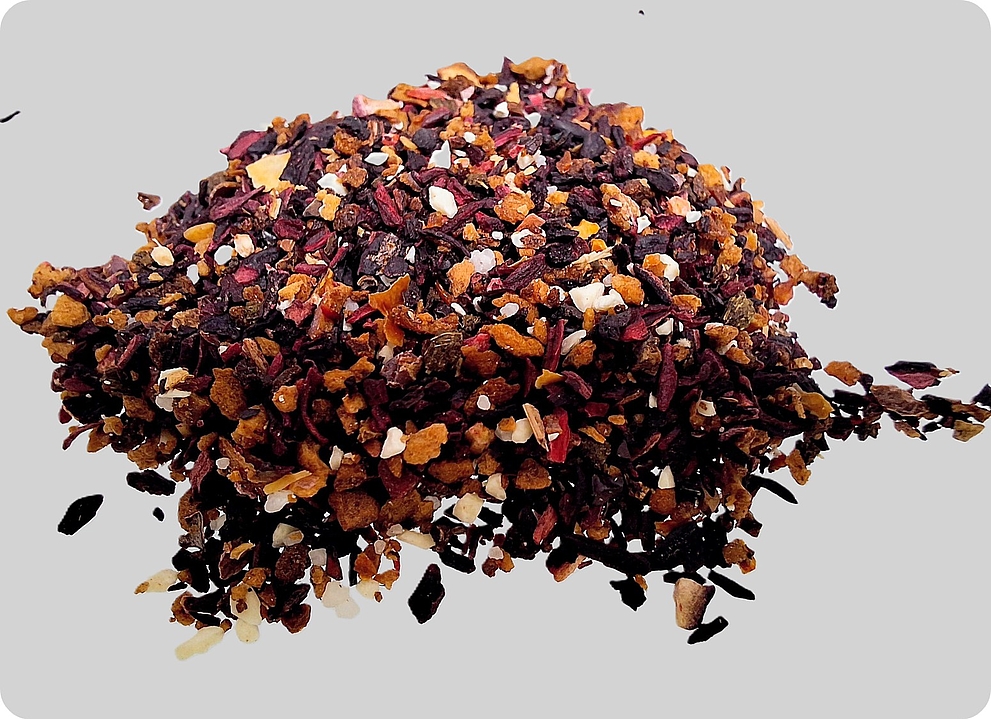
Moisture Sorption and Stability of Herbal and Fruit Tea Compositions
The interaction of tea with ambient humidity is a major challenge in developing stable products. Due to their composition of leaves, blossoms, and dried fruits, both, traditional teas as well as herbal- and fruit tea blends are often hygroscopic. During storage or export to tropical climates, moisture adsorption may lead to quality loss, including clumping, texture changes, and aroma degradation. Furthermore, at elevated aw-values, the risk of microbial spoilage increases critically. Application Note 26-01 investigates the moisture sorption behavior of several herbal and fruit tea compositions. The results demonstrate the impact of ingredients, process conditions, and packaging on product-moisture interactions and shelf-life.
Literature References for Food-Moisture-Interaction with the proUmid DVS Instruments
Marco Lopriore, et al. „Impact of Environmental Humidity on Instant Coffee Stability: Defining Moisture Thresholds for Quality Degradation and Shelf Life Prediction.“ Foods 14(10), 1826, 2025. DOI
W. Jin, et al. „A High-Efficiency Radio-Frequency-Assisted Hot-Air Drying Method for the Production of Restructured Bitter Melon and Apple Chips.“ Foods 13(2), 197, 2024. DOI
S. H. V. Cornet. „Water binding and water release by plant-based meat analogues.“ Wageningen University Research (Thesis), 2021. DOI
Chen, Yi, et al. "Crust treatments to reduce bread staling." Current Research in Food Science, vol. 4, 2021, pp. 243-251. DOI


Contact us today
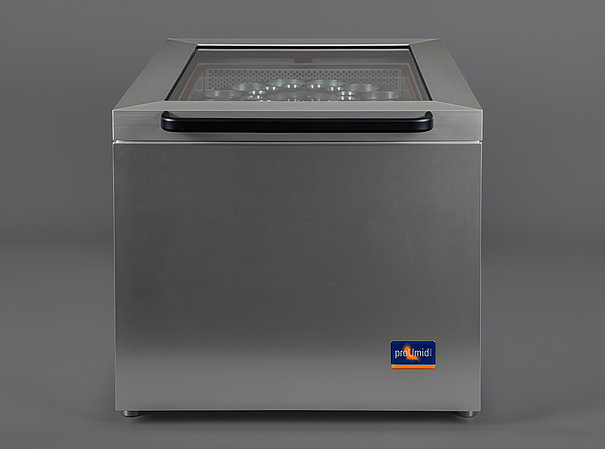
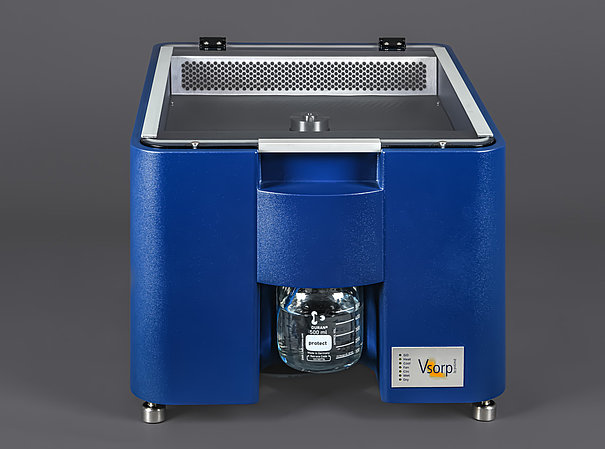
proUmid specializes in the manufacturing and worldwide distribution of systems for measuring the sorption properties of materials, as well as humidity generators for analytical applications. Our devices and instruments are used globally in a variety of different applications for water vapor sorption and for regulating relative humidity in analytical instruments.